The China Manufacturing Advantage Remains Strong

Last Updated on February 19, 2026 by China Sourcing
Why Global Companies Continue to Rely on China for Strategic Production
In 2026, China’s manufacturing advantages remain at the forefront as the world’s foremost manufacturing powerhouse. This is not simply because it produces at scale, but because its industrial ecosystem continues to evolve rapidly into high-value, tech-driven production.
China accounts for roughly 30% of global manufacturing output, far more than any other country, and has held the title of the world’s largest manufacturer for over a decade.
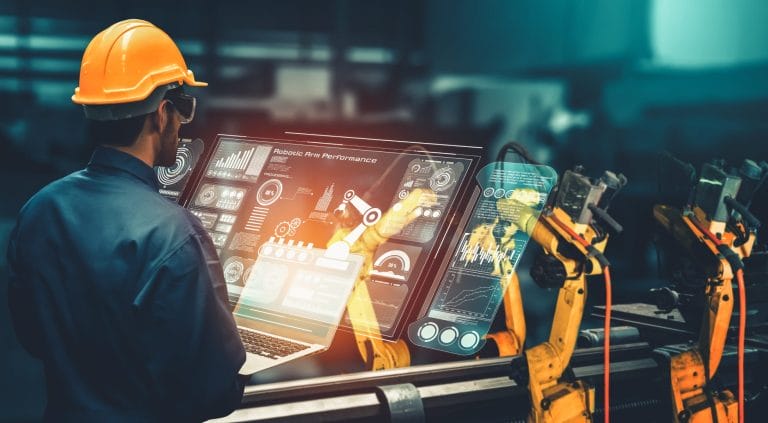
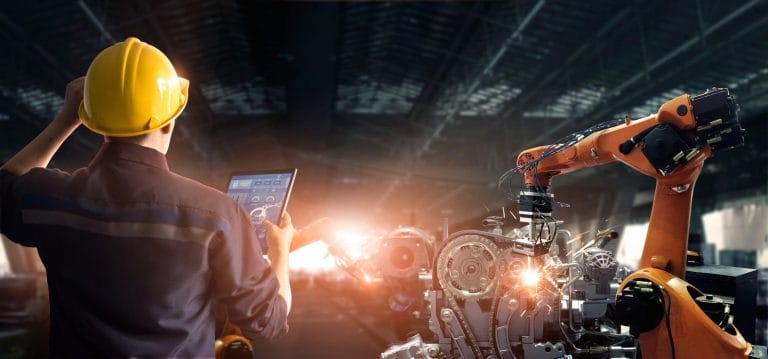
This dominance is being reinforced by unprecedented levels of automation and smart manufacturing adoption. In 2025 alone, China produced over 595,000 industrial robots, outpacing the total from the entire previous year, underscoring how factories across sectors, from automotive to electronics and renewables, are accelerating their digital transformation.
Unlike lower-cost alternatives in Southeast Asia, China combines massive production scale with advanced innovation capabilities. It is investing heavily in robotics, AI, and industrial IoT to transform factory floors into agile, data-driven environments that continuously improve quality, efficiency, and responsiveness to global demand.
China’s edge isn’t just automation. Its infrastructure network, from ports and rail corridors to renewable energy capacity and digital connectivity, remains unmatched in Asia, enabling seamless integration into global supply chains.
Understanding China’s evolving competitive advantages is essential for any global sourcing strategy.
At China Sourcing International, we help businesses unlock that advantage with structure and oversight. Through our global sourcing services, we ensure companies do not simply manufacture in China; they leverage the many China manufacturing advantages intelligently, safely, and profitably.

1. Scale & Supply Chain Integration
In major manufacturing clusters such as Shenzhen (electronics), Dongguan (hardware), and Suzhou (precision manufacturing), suppliers, sub-suppliers, tooling factories, and logistics providers operate within tightly integrated networks. This allows:
- Faster prototyping
- Lower minimum order quantities
- Rapid scaling from pilot runs to mass production
- Shorter lead times
By contrast, emerging manufacturing hubs often require importing components or tooling from other countries, increasing both cost and time-to-market.
For startups and SMEs especially, this ecosystem dramatically reduces complexity and operational risk.
To learn more,
call us at 1-628-500-8026
2. Automation & Smart Manufacturing
China is now the world’s largest market for industrial robots and one of the fastest adopters of factory automation.
Recent industry data shows:
- China installs more industrial robots annually than the rest of the world combined.
- Robotics density in manufacturing continues to rise, especially in automotive, electronics, and battery production.
- AI-driven quality control and machine vision systems are increasingly standard in export-focused factories.
This shift is crucial. As labor costs rise, automation preserves competitiveness by:
- Improving consistency and quality
- Reducing production errors
- Increasing output per worker
- Supporting reshoring-resistant cost structures
The narrative that China competes only on cheap labor is now outdated. It competes on automation-enabled efficiency at scale.
Want to manufacture in China?
Talk to our sourcing agents.
Call 1-628-500-8026
3. Skilled Workforce & Engineering Talent
China’s manufacturing advantages include its hundreds of thousands of graduating engineers annually and China continues to invest heavily in STEM education (Science, Technology, Engineering and Math).
This supports:
- Advanced manufacturing
- Robotics engineering
- Electric vehicle production
- Semiconductor equipment
- Renewable energy technologies
The rise of high-tech sectors such as EVs, solar panels, batteries, and consumer electronics demonstrates China’s shift from low-value assembly to high-value manufacturing and product innovation.
Countries such as India and Vietnam offer lower wages in some sectors, but they do not yet match China’s technical density or supplier depth in advanced industries.
Find out more!
Call CSI at 1-628-500-8026
4. Infrastructure & Logistics Superiority
China’s infrastructure remains unmatched:
- World-class deepwater ports
- Extensive high-speed rail and freight networks
- Highly developed highway systems
- Advanced e-commerce logistics capabilities
Major ports such as Shanghai and Shenzhen consistently rank among the busiest globally, ensuring strong global trade connectivity.
This logistical backbone allows manufacturers to ship quickly, manage inventory efficiently, and respond to global demand shifts with agility. See our Logistics page for additional information.
5. Competitive Context – The Rise of “China+1”
Global sourcing strategies have evolved.
Many companies now adopt a China+1 approach, diversifying part of their production to countries such as:
- Vietnam (labor-intensive assembly)
- India (electronics and pharmaceuticals)
- Mexico (nearshoring to North America)
However, diversification does not equate to replacement.
In most cases:
- China remains the primary production hub.
- Alternative countries handle overflow or risk mitigation.
- High-complexity manufacturing still concentrates in China.
Emerging markets often face limitations in supplier networks, infrastructure, or production consistency that China resolved decades ago.
For more in-depth analysis,
call CSI at 1-628-500-8026
6. Cost Structure – Beyond Wages
Yes, labor costs in China have risen over the past decade.
But total production cost is influenced by more than hourly wages. China offsets rising labor costs through:
- Automation
- Production efficiency
- Reduced defect rates
- Lower coordination costs
- Integrated supplier proximity
When factoring in inspection and quality control, supply chain maturity, and rework risk, China often consistently remains cost-competitive, especially for medium-to high-complexity products.
7. Geopolitics & Risk Considerations
Geopolitical tensions and tariff environments have introduced new sourcing risks.
However:
- Many manufacturers adjust supply chain structures rather than exit China entirely.
- Regional trade agreements in Asia continue strengthening China’s role in regional manufacturing networks.
- Companies prioritize resilience and flexibility, not wholesale relocation.
China’s manufacturing advantages keep adapting, not disappearing.
Let us tell you more!
Call CSI at 1-628-500-8026
Outlook: Why China’s Manufacturing Edge Will Persist
China has the edge on its manufacturing future, which will likely be defined by:
- Smart factories and AI integration
- Green manufacturing and renewable energy leadership
- Advanced robotics adoption
- Continued export dominance in electronics, EVs, batteries, and solar technologies
While competition from Southeast Asia, India, and Mexico will grow, no single country currently replicates China’s:
- Scale
- Infrastructure
- Skilled workforce
- Supply chain density
- Automation intensity
For businesses, particularly SMEs and scaling brands, China remains one of the most reliable and capable manufacturing environments in the world.
Take Advantage of China’s Cost-Effective Manufacturing
China’s manufacturing advantage is no longer just about cost. It is about ecosystem power, technological advancement, and operational scale.
Diversification strategies will continue, but China is positioned to remain a cornerstone of global manufacturing for the foreseeable future.
For companies evaluating sourcing strategies in 2026 and beyond, the decision is not whether China still matters, but how to integrate it intelligently into a resilient, multi-country supply chain strategy.
Let China Sourcing International help your business take advantage of China’s cost-effective manufacturing. Our sourcing agents are local, have decades of experience and are multi-lingual. Visit this page to learn more about our Sourcing Process.
Contact us online or
call CSI at 1-628-500-8026
China Manufacturing Advantages FAQ
1. Why is China still the world’s largest manufacturing country?
China produces about 30% of global manufacturing output due to its massive scale, integrated supplier ecosystems, advanced infrastructure, and high automation levels.
2. Is China still cheaper than Vietnam or India?
While wages may be lower in Vietnam or India, China often remains competitive on total production cost because of automation, efficiency, supplier proximity, and lower defect rates.
3. What is China’s biggest manufacturing advantage today?
Its biggest advantage is its complete industrial ecosystem with dense supplier networks, engineering talent, tooling capabilities, and logistics infrastructure operating at scale.
4. What industries is China strongest in?
China leads in electronics, electric vehicles (EVs), batteries, solar panels, consumer goods, and industrial machinery.
5. What is the China+1 strategy?
China+1 is a sourcing strategy where companies keep core production in China while adding a secondary country to diversify risk.
6. Is China losing manufacturing to other countries?
Some labor-intensive production is shifting to Southeast Asia and India, but complex and high-volume manufacturing remains heavily concentrated in China.
7. How does automation help China stay competitive?
China installs more industrial robots annually than any other country, helping factories improve quality, reduce costs, and offset rising wages.
8. Is China good for small and medium-sized businesses?
Yes. SMEs benefit from supplier density, rapid prototyping, scalable production, and export-experienced factories.
9. How does China compare to Mexico for manufacturing?
Mexico is strong for North American nearshoring, but China generally offers deeper supplier ecosystems and stronger capabilities for complex electronics and high-volume production.
10. Is China moving toward high-tech manufacturing?
Yes. China is heavily investing in robotics, AI-driven quality control, EVs, semiconductors, and renewable energy manufacturing.
11. Will China remain competitive over the next decade?
Given its infrastructure, automation leadership, engineering workforce, and supply chain depth, China is expected to remain a major global manufacturing hub for the foreseeable future.
Sources: